Seals & Seal Kits for Hydraulic Cylinders – Engineered for Mining Excavators
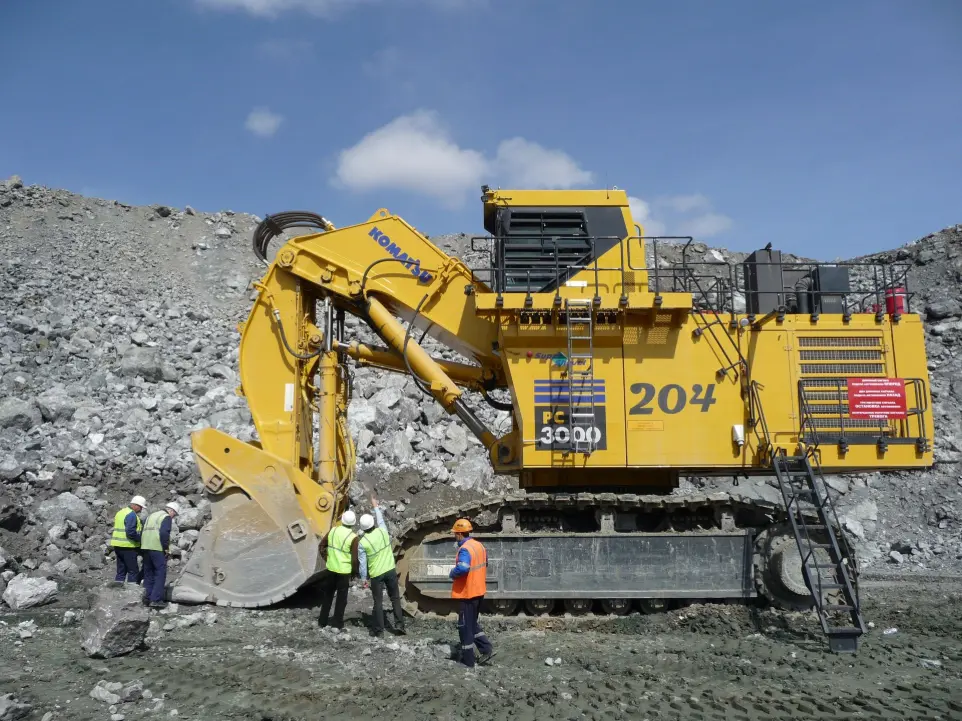
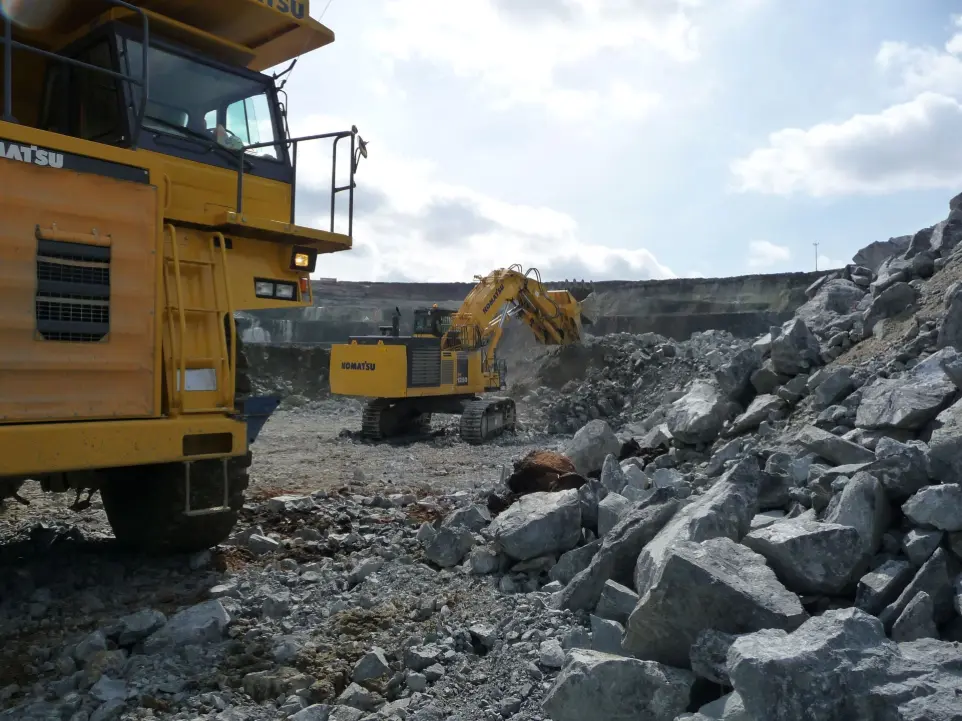
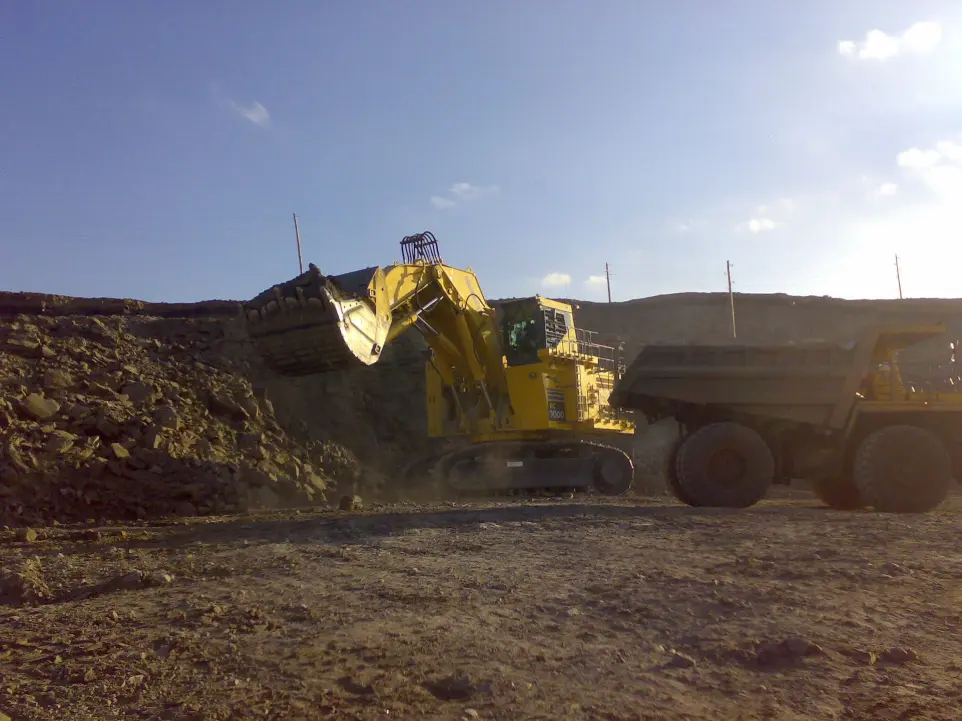
Hydraulic cylinders in mining excavators operate under extreme pressure, contamination exposure, and continuous dynamic load. The reliability of these cylinders depends directly on the quality and correct specification of their sealing systems.
We focus on sealing solutions specifically aligned with heavy-duty excavator applications. Whether for overhaul, preventive maintenance, or engineered replacement, our flange seals and seal kits are selected and specified to match real operating conditions in mining environments.
Functional Requirements in High-Load Applications
In large excavator cylinders, seals must ensure:
Stable pressure separation between piston chambers
Zero external leakage at rod interfaces
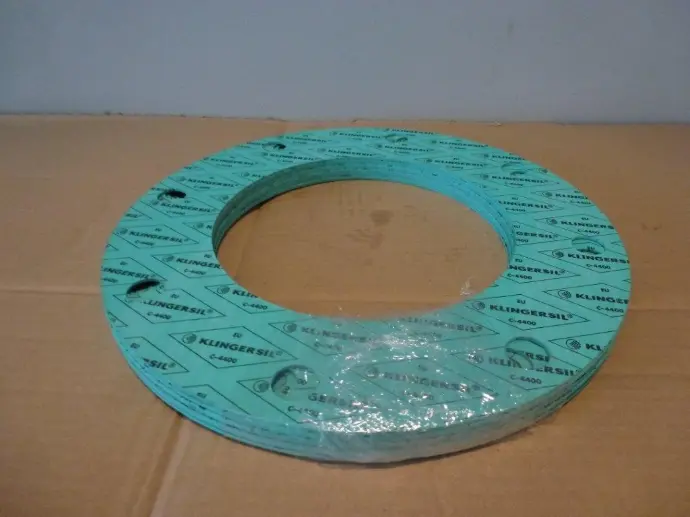
Static sealing integrity at flange connections
Abrasion resistance in contaminated environments
Controlled friction behavior under long stroke cycles
We evaluate cylinder configuration, rod diameter, operating pressure, and load behavior before defining sealing architecture.
Flange seals are specified to maintain structural integrity at bolted housing interfaces, where vibration and pressure pulsation are present.
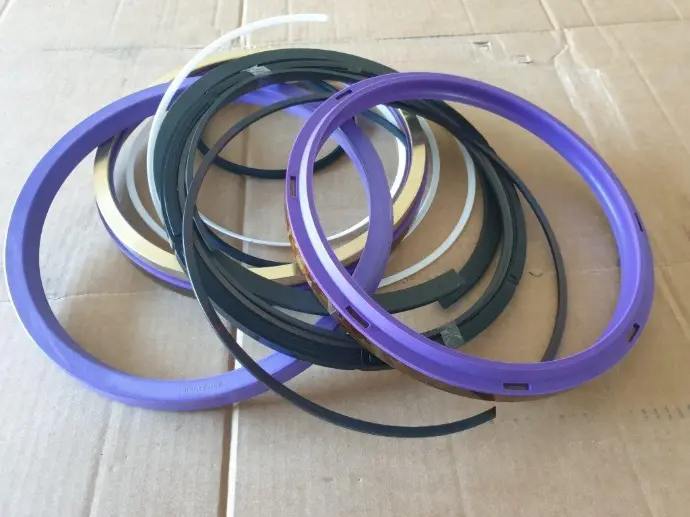
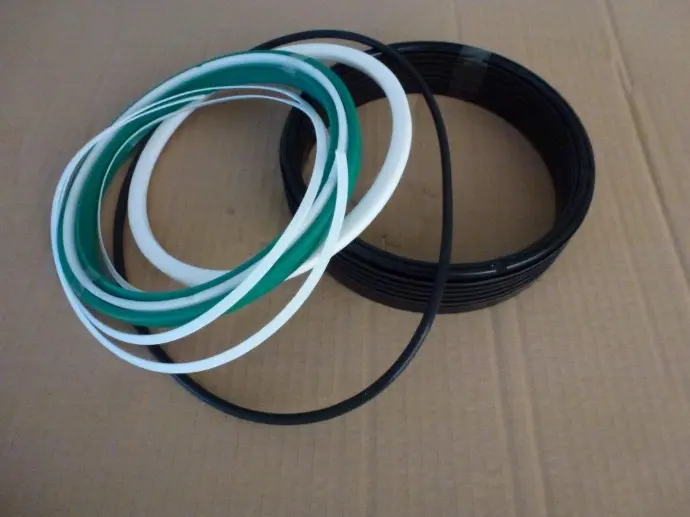
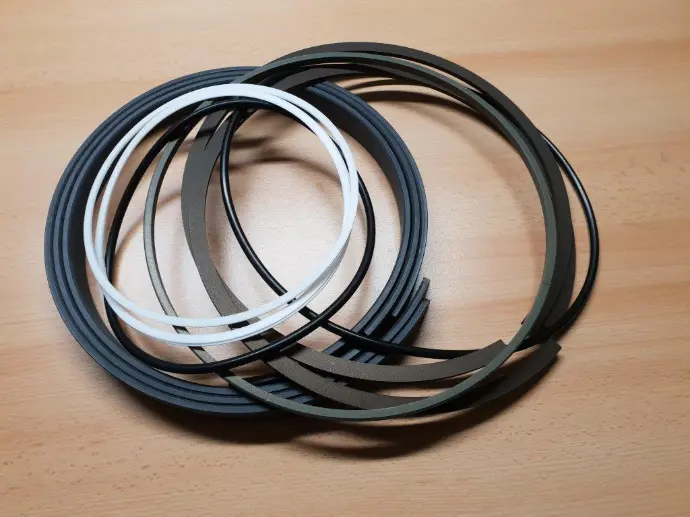
Seal kits are assembled dimensionally matched to the respective cylinder configuration to avoid tolerance mismatch during installation.
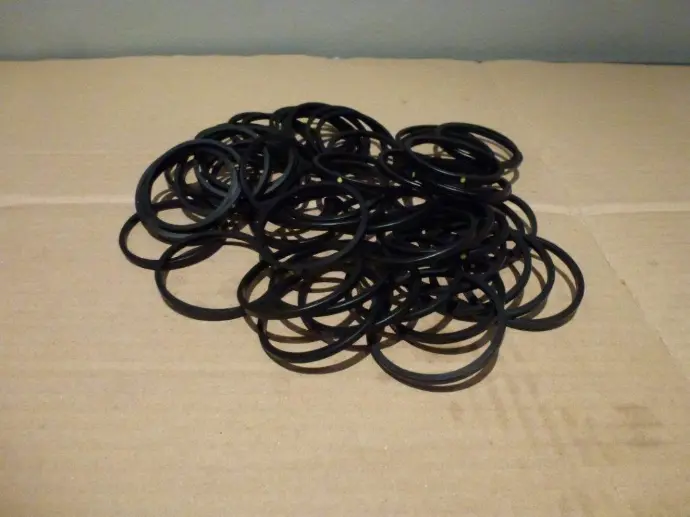
Seal System Architecture
A functional sealing system consists of:
Rod seals – designed to resist extrusion under peak pressure
Piston seals – maintaining defined force output
Wiper seals – protecting internal components from abrasive particles
Guide / wear rings – absorbing radial loads and preventing metal-to-metal contact
We align groove geometry, hardness class, and material composition with pressure class and dynamic movement profile.
Sealing performance depends on controlled elastic deformation. Incorrect geometry or material selection leads to extrusion damage, increased friction, or premature wear — particularly in high-tonnage excavator systems.
Material Engineering Considerations
Material selection is determined by:
Operating pressure (often >350 bar)
Temperature range
Hydraulic fluid compatibility
Stroke length and velocity
Side-load behavior
Depending on application requirements, we specify materials such as:
- NBR – oil-resistant elastomer for standard pressure and temperature conditions.
- HNBR – improved heat and media resistance for demanding environments.
- PU – high wear and extrusion resistance for heavy-duty dynamic sealing.
- PTFE – low-friction, high-temperature material for extreme load conditions.
Low-temperature performance and extrusion resistance are primary decision factors in mining environments.
How our engineering works
1
Technical Input Submission
Provide cylinder model, OEM references, dimensional data or operating parameters.
2
Specification & Compatibility Review
We analyze pressure class, temperature range, rod diameter, material requirements and application environment.
3
Sealing System Definition & Quotation
Seal geometry, material composition and kit configuration are defined based on operating conditions. You receive a technically aligned commercial proposal.
4
Controlled Supply & Application Support
Components are delivered with defined specification alignment for mining excavator cylinders worldwide.
Low-Temperature and Cold-Start Behavior
In sub-zero environments, hydraulic systems experience:
Reduced elastomer flexibility
Increased oil viscosity
Thermal contraction differences between steel and polymer
Higher mechanical stress during first movement cycles
We consider these parameters when selecting compound variants and defining dimensional tolerances to prevent cold-start leakage and material cracking.
Engineering Perspective
In mining excavator cylinders, sealing systems directly influence:
Hydraulic efficiency
Maintenance intervals
Operational stability
Lifecycle cost
From an engineering standpoint, seals are load-bearing functional components within a high-pressure mechanical structure.
Correct specification, dimensional precision, and material alignment determine long-term reliability under extreme duty conditions.
Hydraulic Seal Kits – Technical Specification
Correct material selection and geometry alignment are critical for cylinder performance.
Send OEM references or dimensional data for compatibility review.
Sealing Systems FAQ
Key technical questions related to hydraulic cylinder seals, material selection and application conditions in mining environments.
Seal kits are dimensionally aligned with OEM cylinder geometry and groove configuration.
Material selection and hardness class are defined according to pressure range, temperature conditions and hydraulic media compatibility.
Material selection is based on operating pressure, temperature range, stroke velocity and environmental exposure.
Depending on the application, NBR, HNBR, polyurethane or PTFE-based compounds are specified to ensure extrusion resistance and long-term sealing stability.
Sealing systems are specified for heavy-duty hydraulic cylinders operating at high pressure levels. Groove compatibility, extrusion gap tolerance and dynamic load behavior are evaluated before supply.
For accurate specification, the following data is recommended:
- OEM reference or cylinder model
- Rod and bore diameter
- Operating pressure
- Temperature range
- Application environment (dust, moisture, abrasive conditions)
For sub-zero environments, low-temperature elastomer compounds and PTFE-based configurations are specified to maintain flexibility and sealing force during cold start-up conditions.
Complete seal kits for cylinder overhaul are available, including rod seals, piston seals, wipers and guide rings. Individual sealing components can also be specified depending on maintenance requirements.

OEM Groove Alignment
High-Pressure Stability

Defined Compound Specification

Configuration-Controlled Supply