Functions, Applications and Operating Principles
Modern hydraulic excavators rely on a wide range of specialized valves to control pressure, flow rate, direction, safety, lubrication and braking functions. These valves ensure precise machine control, high efficiency, operator safety and long service life — even under extreme working conditions such as cold regions or heavy-duty construction environments.
Below is a detailed overview of the most important valve types used in hydraulic excavators, their purpose, and how they function:
1. Suction Valve (or Anticavitation-Valve, Make-Up
Valve)
Purpose:
A suction valve, also known as a make-up valve, prevents cavitation in hydraulic cylinders and motors. It ensures that sufficient hydraulic oil flows into a low-pressure chamber when rapid movement or external forces create vacuum conditions.
Function:
When pressure on one side of a cylinder drops below tank pressure, the valve automatically opens and allows oil from the return line or tank to flow into the affected chamber. This prevents air intake, protects sealing systems, and avoids damage caused by cavitation.
2. Throttle Check Valve (Flow Control with Check
Function)
Purpose:
Used to control movement speed of hydraulic cylinders and motors.
Function:
This valve combines a throttle (flow restrictor) and a check valve in one unit. In one direction, the oil flow is restricted to control speed. In the opposite direction, oil flows freely through the integrated check valve. This design allows controlled extension and free return movement, for example in boom or arm cylinders.
3. Pressure Control Valve
Purpose:
Regulates system pressure within a defined operating range.
Function:
The valve monitors hydraulic pressure and opens or adjusts when a preset pressure value is reached. It stabilizes system performance, protects components and ensures consistent machine behavior under varying loads.
4. Pressure Supply Valve
Purpose:
Ensures stable pressure supply to specific control circuits.
Function:
It prioritizes and maintains pressure in designated hydraulic lines, even when other functions are active. This is especially important in load-sensing systems or pilot control circuits.
5. Pressure Relief Valve
Purpose:
Protects the hydraulic system against overpressure.
Function:
When system pressure exceeds the preset limit, the valve opens and diverts excess oil back to the tank. This prevents damage to pumps, cylinders, hoses and valve blocks. It is one of the most critical safety components in the hydraulic system.
6. Spray Valve (Injection Valve)
Purpose:
In specific applications, spray valves are used for controlled fluid injection, lubrication, or cooling.
Function:
The valve opens under defined pressure or electrical control and injects fluid in a fine spray pattern into a designated area. In construction machinery, it may support lubrication or special cooling processes.
7. Check Valve
Purpose:
Prevents reverse flow in hydraulic lines.
Function:
The valve allows oil to flow in one direction only. If reverse flow occurs, the internal spring-loaded poppet closes immediately. Check valves are essential for load holding and system stability.
8. Pressure Reducing Valve
Purpose:
Reduces higher system pressure to a lower, controlled working pressure.
Function:
It maintains a constant reduced pressure on the outlet side, regardless of fluctuations on the inlet side. This is important for pilot control systems, auxiliary circuits or sensitive hydraulic components.
9. Brake Valve
Purpose:
Ensures safe and controlled braking of hydraulic motors, especially in travel drives and swing drives.
Function:
Brake valves regulate return oil flow to prevent uncontrolled acceleration of hydraulic motors under load (overrunning loads). They maintain back pressure and provide smooth deceleration.
10. Lowering Valve (or Countersunk Valve, Load Holding Valve)
Purpose:
Prevents uncontrolled lowering of booms, arms or attachments.
Function:
The valve remains closed until sufficient pilot pressure is applied. It securely holds the load in position and opens gradually to allow controlled lowering movement. This significantly enhances operational safety.
11. Solenoid Directional Control Valve
Purpose:
Controls the direction of hydraulic oil flow electrically.
Function:
An electromagnetic solenoid shifts the internal spool when energized. This directs hydraulic oil to different actuator ports. Solenoid directional valves enable precise, electronically controlled machine movements and integration with modern control systems.
12. Pneumatic Valve
Purpose:
Used in air-operated subsystems such as braking, auxiliary controls or lubrication systems.
Function:
Pneumatic valves regulate compressed air flow. They may be mechanically, electrically or pneumatically actuated. Though excavators are primarily hydraulic, pneumatic components are often integrated for specific functions.
13. Metering Valve (or Central Lubrication
Distribution Valve)
Purpose:
Ensures accurate distribution of grease to bearings, bushings and pins.
Function:
In centralized lubrication systems, the distribution valve meters precise amounts of lubricant to individual lubrication points. This guarantees uniform lubrication, reduces wear and extends service intervals.
14. Vent Valve (Bleeding Valve)
Purpose:
Removes trapped air from hydraulic systems.
Function:
Air in hydraulic circuits reduces efficiency and causes erratic movements. The vent valve allows controlled release of air during commissioning, maintenance or after repairs. Proper venting ensures smooth and reliable system operation.
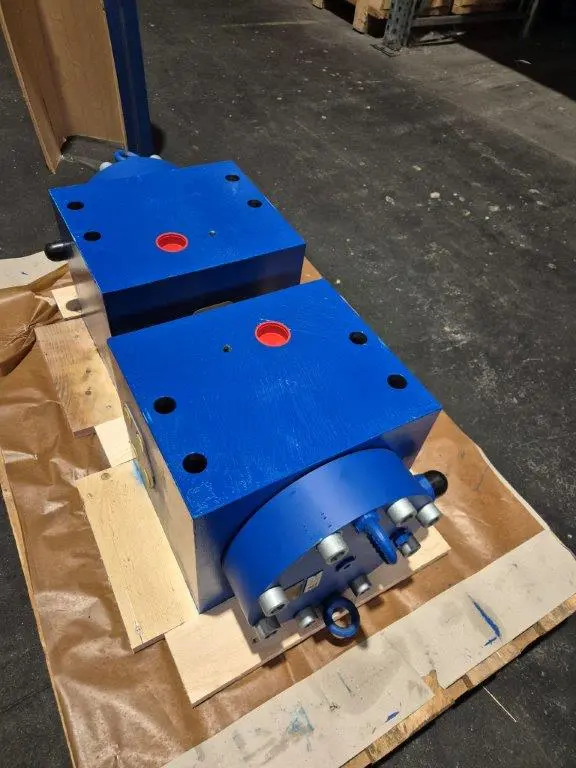
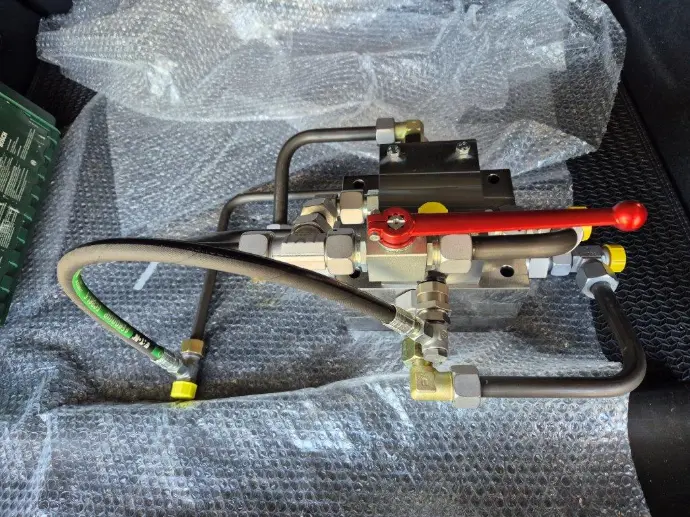
Our Commitment to Performance and Reliability
We supply high-performance valve technology, which is essential for demanding construction environments. Precision manufacturing, high-grade materials and strict quality control ensure optimal pressure stability, leak-tightness and durability.
By using advanced valve solutions, operators benefit from:
- Reduced downtime
- Lower maintenance costs
- Improved machine responsiveness
- Extended component lifespan
- Higher overall productivity
A well-engineered hydraulic valve system transforms raw hydraulic power into controlled, efficient and safe machine performance — delivering reliability you can depend on in every working condition.
How our engineering works
1
Operating conditions analysis
Pressure, flow, duty cycle and environmental factors are defined.
2
Hydraulic System Integration
Valve engineering based on complete hydraulic circuit behavior.
3
Material Selection & Manufacturing
Precision machining, verified sourcing and durable materials.
4
Quality Control & Delivery
Specification-aligned inspection and global deployment.
Importance in Heavy-Duty and Cold-Climate Applications
In harsh environments — particularly in cold regions — valve performance is critical. Low temperatures increase oil viscosity, slow response times and can affect sealing performance. High-quality materials, precise machining tolerances and suitable hydraulic fluids are essential to maintain reliable valve operation.
Robust valve design ensures:
- Stable pressure control
- Safe load handling
- Smooth machine movements
- Protection against overload
- Extended component lifespan
- Reduced maintenance costs
Why High-Quality Valves Matter
In heavy-duty excavators, hydraulic control valves are not merely flow regulators — they define system stability, operational safety and overall machine efficiency. In mining applications, where equipment operates under continuous load cycles and extreme pressure conditions, valve quality directly impacts performance and uptime.
Each valve contributes to:
- Smooth and accurate machine control
- Maximum operational safety
- Reduced wear and longer service life
- Protection against overload and cavitation
- Increased energy efficiency
- Reliable operation in extreme environments
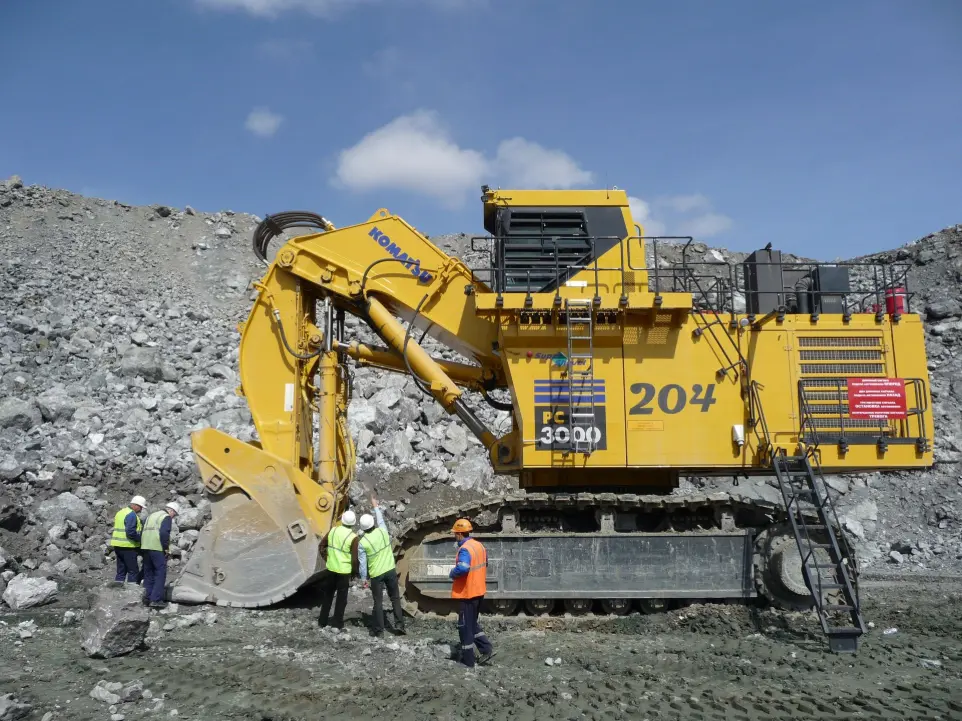
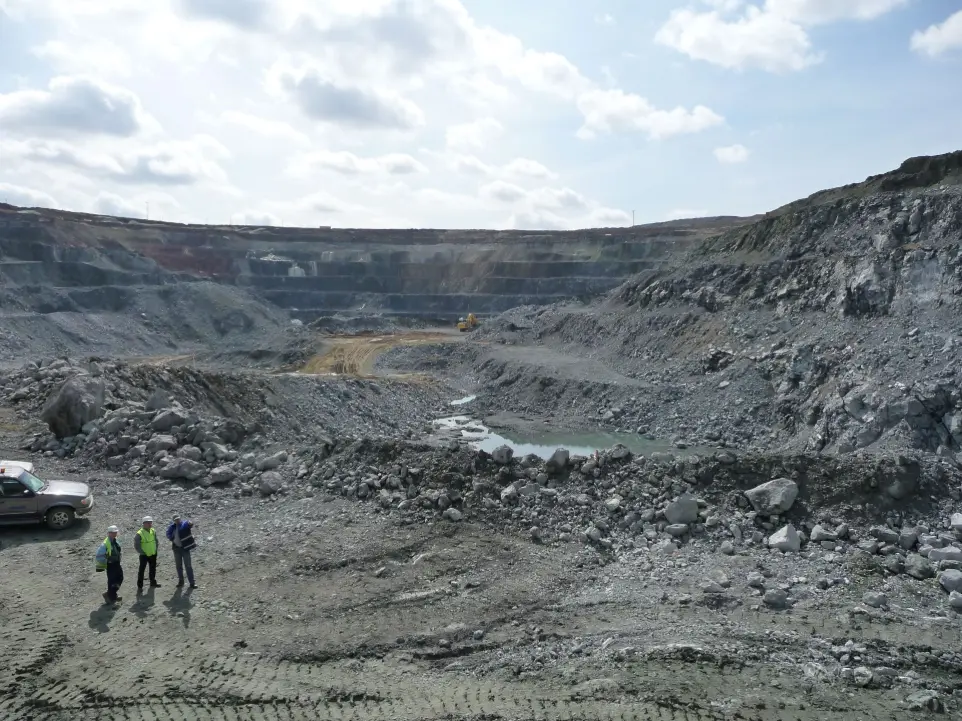
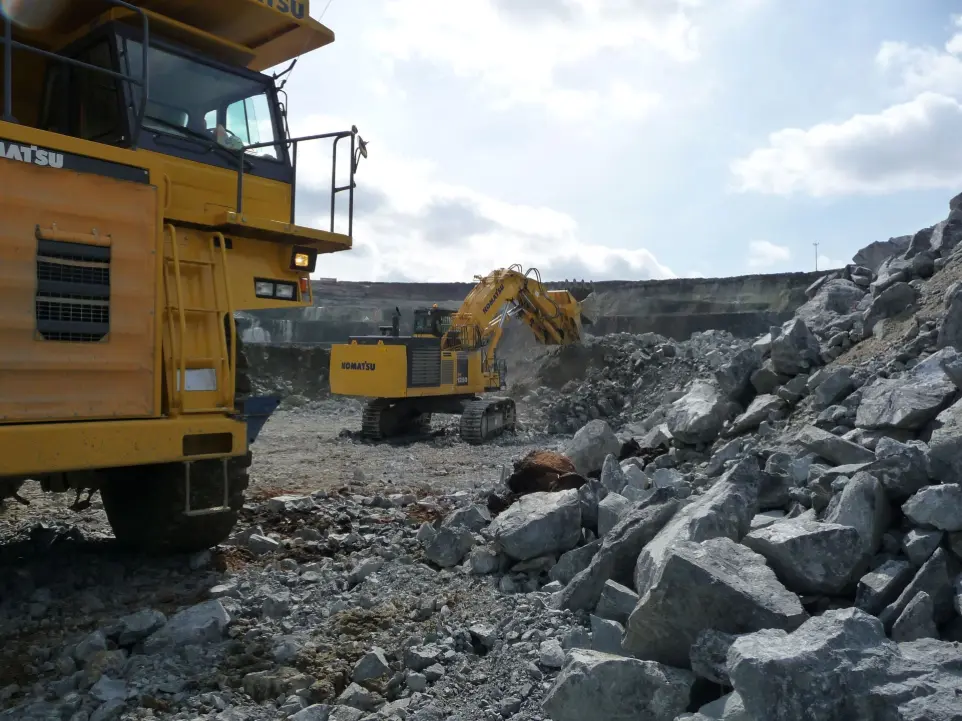
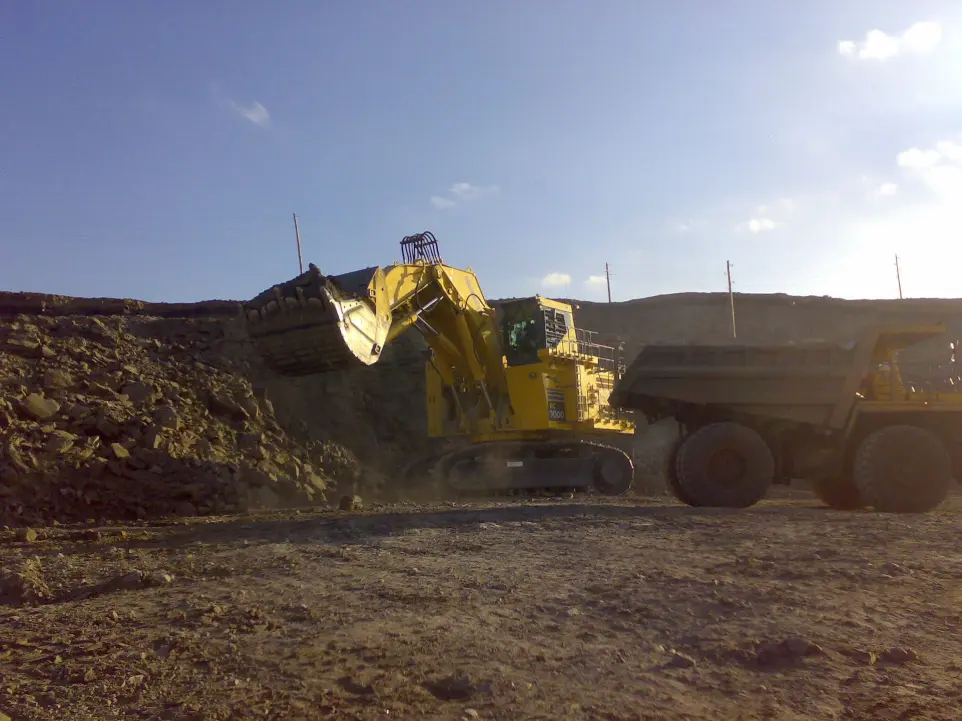
Engineered Hydraulic Valves for Mining Equipment
Our hydraulic valves are developed for high-pressure mining systems, ensuring stable flow control and durability under continuous load conditions.
Standard configurations are available, and custom production can be arranged based on defined technical parameters.
Hydraulic Valve FAQ
Key technical questions related to hydraulic valve design, system integration and mining applications.
Yes. Our hydraulic valves are developed for heavy-duty mining equipment operating under high pressure, continuous load cycles and demanding environmental conditions.
Design considerations include pressure stability, flow control behavior, temperature resistance and long-term durability.
Our valve solutions are engineered in accordance with defined hydraulic parameters such as pressure class, flow capacity, mounting dimensions and sealing requirements.
Where required, we manufacture according to specified technical characteristics to ensure system compatibility.
Yes. In addition to standard configurations, we can produce hydraulic valves based on defined technical requirements, including:
Operating pressure range
Flow rate characteristics
Response behavior
Material and sealing specifications
Manufacturing is aligned with system-level performance expectations.
Valve selection and design are evaluated within the complete hydraulic circuit.
We consider interaction with pumps, cylinders and hydraulic blocks to ensure stable pressure control and predictable system behavior under load.
Our hydraulic valves are designed for operation in demanding environments, including low-temperature mining regions.
Material selection, sealing systems and internal tolerances are defined to maintain functional reliability under temperature fluctuations.
Yes. We can supply valve solutions compatible with various mining equipment generations, provided technical parameters or OEM references are available.

OEM-Level Integration
Hydraulic valves aligned with mining system pressure, flow and mounting specifications.
Engineered for Extreme Conditions
Stable performance under high pressure, continuous load and temperature variations.
Controlled Production
Defined machining tolerances and verified manufacturing processes for mining applications.
Global Delivery
Engineered valve solutions supplied worldwide according to technical requirements.