Sensors in Hydraulic Excavators: Purpose and Functionality
Hydraulic excavators are complex machines that rely on precise control and monitoring of numerous parameters to ensure optimal performance, safety, and efficiency. At the heart of this monitoring are various types of sensors, including pressure sensors, temperature sensors, and speed (RPM) sensors. These components play a crucial role in maintaining the health of the machinery and supporting the operator in executing tasks with precision.
At HD Mining Parts, we supply sensor solutions engineered for OEM-level compatibility, high-pressure hydraulics, and mining-duty applications.
Purpose of Sensors in Hydraulic Excavators
Pressure Sensors:
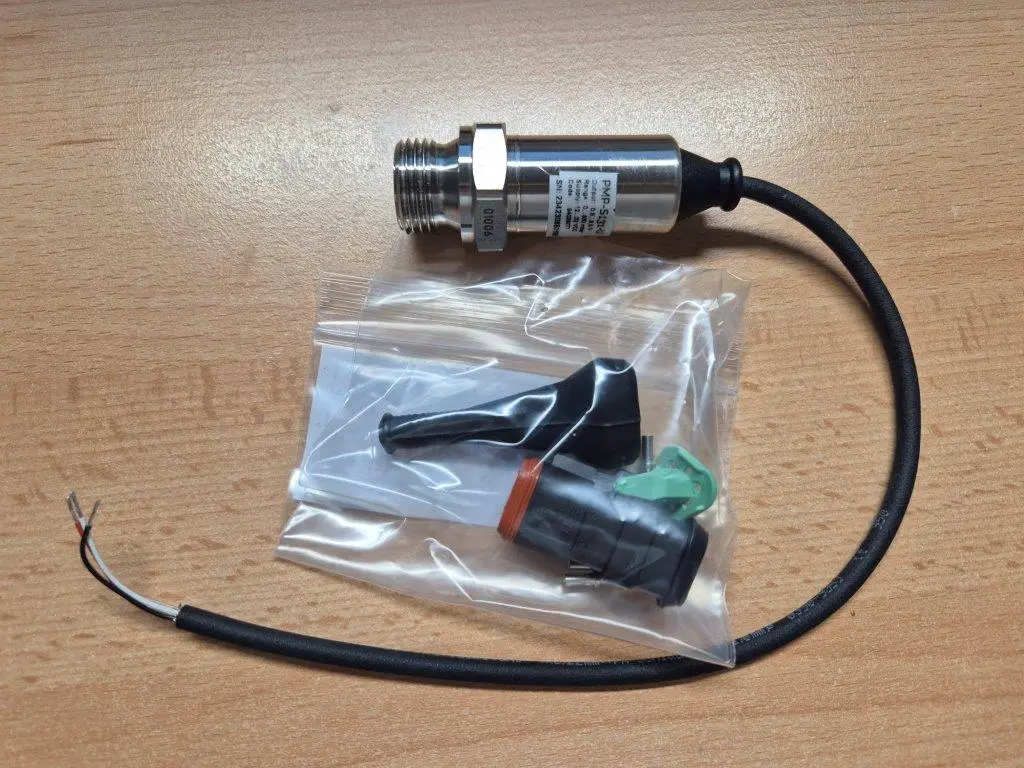
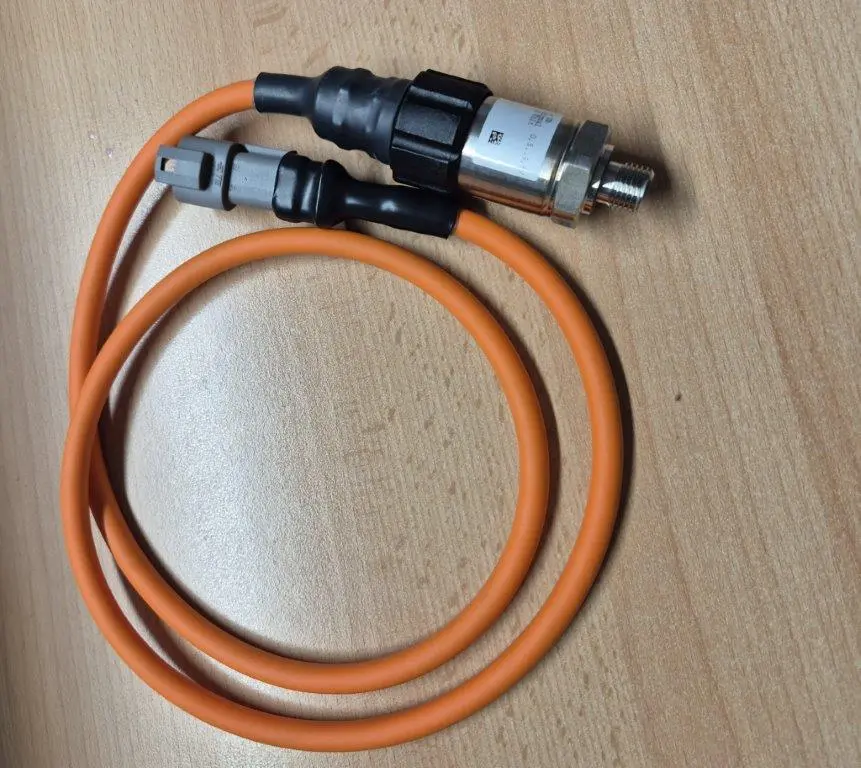
Pressure sensors monitor the hydraulic system’s fluid pressure, ensuring that cylinders, motors, and valves operate within safe and efficient parameters. By providing real-time pressure data, these sensors prevent overloading, detect leaks, and help optimize the force applied by the excavator’s arm or attachments.
Temperature Sensors:
Hydraulic fluid and engine components must operate within specific temperature ranges to maintain performance and prevent damage. Temperature sensors continuously monitor fluid and engine temperatures, alerting operators to overheating conditions and enabling automated adjustments to cooling systems. This reduces wear and extends the lifespan of critical components.
Speed and RPM Sensors:
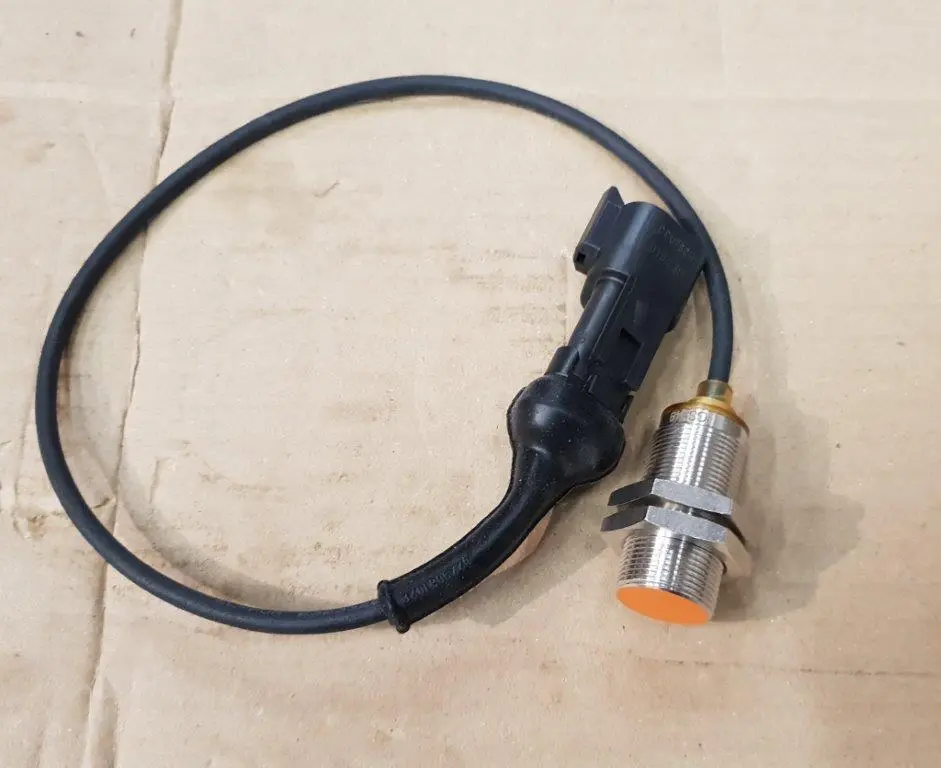
Speed sensors track the rotational speed of engines, hydraulic pumps, and tracks. They provide essential feedback for controlling machine movements, ensuring synchronization of hydraulic operations, and preventing mechanical strain. Accurate RPM monitoring also contributes to fuel efficiency and reduces the risk of mechanical failure.
How Sensors Work in Hydraulic Excavators
Pressure Sensors: Typically based on piezoelectric, strain gauge, or capacitive technologies, these sensors convert pressure into an electrical signal. This signal is sent to the machine’s control system, which interprets it to regulate hydraulic flow, activate safety mechanisms, or provide visual feedback to the operator.
Temperature Sensors: Commonly using thermocouples or resistance temperature detectors (RTDs), temperature sensors measure heat levels by detecting changes in electrical resistance or voltage. The data is continuously monitored by the machine’s onboard control system to ensure proper operation and to trigger alarms or automatic adjustments if temperatures exceed safe thresholds.
Speed Sensors: Often using magnetic, optical, or Hall effect principles, speed sensors detect rotational velocity by measuring changes in magnetic fields or light interruptions caused by moving parts. This information is crucial for controlling movement precision, engine performance, and hydraulic response.
Benefits of Sensor Integration
By integrating advanced sensors into hydraulic excavators, manufacturers provide operators with a higher degree of control, improved safety, and reduced maintenance costs. Real-time monitoring allows for predictive maintenance, early detection of potential failures, and overall enhancement of operational efficiency. Additionally, sensors enable compliance with increasingly strict environmental and safety regulations by ensuring engines and hydraulics operate within designated parameters.
In summary, sensors are indispensable components of modern hydraulic excavators. They transform raw mechanical activity into actionable data, safeguarding the machine, optimizing performance, and enhancing operator confidence.

Engineering Approach at HD Mining Parts
We supply sensors:
According to OEM part numbers
Based on functional specification (pressure range, response time, signal type)
For retrofit or system upgrade projects
For mining, quarry, and high-cycle duty operations
Where required, we support cross-referencing, parameter matching, and technical validation to ensure safe system integration.
Key Engineering Parameters We Verify
Pressure rating & overload tolerance
Temperature operating range
IP protection class (dust / water resistance)
Signal type compatibility (analog / digital)
Connector standard & harness interface
Vibration and shock resistance
All components are selected or engineered for heavy-duty excavator applications, not light industrial substitutes.
How our engineering works
1
Operating conditions analysis
Load spectrum, pressure range, temperature cycles, vibration level and electrical architecture defined before sensor selection.
2
System-Level Signal Engineering
Measurement range, accuracy class, response time and output signal (4–20 mA / digital) aligned with ECU logic.
3
Calibration & Validation
Factory calibration, pressure proof testing, thermal stability and vibration resistance verified under load conditions.
4
OEM Integration & Delivery
Connector interface, sealing specification and electrical compatibility ensured for safe system integration.
How Sensor Data Integrates into Excavator Control Systems
Modern excavators operate via ECU-based (Electronic Control Unit) architectures. Sensor signals are:
Converted into voltage/current outputs (e.g., 4–20 mA, 0–10 V, digital pulse)
Processed through control algorithms
Used to regulate hydraulic flow, engine load, and safety systems
Logged for diagnostics and predictive maintenance
Reliable signal integrity is essential in mining environments with vibration, dust, and thermal stress.
Why Sensor Quality Matters
In high-tonnage excavators, inaccurate data leads to:
Hydraulic inefficiencies
Premature wear of cylinders and pumps
Increased fuel consumption
Downtime due to false alarms or undetected failures
Precision sensing is not optional — it is foundational to machine availability and lifecycle cost control.
Order Sensors for Mining Excavators
We verify pressure range, signal type, connector interface and ECU compatibility to ensure accurate system integration.
Send your OEM references, technical specifications or operating parameters — our team will validate the correct sensor configuration.
Sensors FAQ
Key technical questions related to sensor specification, signal compatibility and excavator integration.
Yes. Sensors are supplied according to OEM part numbers or validated against defined parameters such as pressure range, accuracy class, signal output, connector type and environmental rating.
Yes. Based on OEM reference, machine model, measurement range, signal type and operating conditions, we perform technical cross-reference and parameter verification.
We typically require OEM part number, measurement range (bar / °C / RPM), output signal (4–20 mA, voltage, digital), connector type, operating voltage and application environment.
Sensors are factory-calibrated and verified for pressure proof level, thermal stability and vibration resistance prior to delivery.
Yes. We support legacy models through cross-referencing and parameter-based matching where original part numbers may be discontinued.
Yes. We support multi-brand and multi-generation fleets with validated technical matching to ensure system compatibility.

OEM-Level Signal Compatibility
Tested for Extreme Mining Conditions

Traceable & Calibrated Sources

Reliable Global Supply